What is FHIR? A plain-language guide for doctors in Senegal
What is FHIR? A plain-language guide to the health data standard: resources, codes, API, SMART on FHIR, who uses it and what it changes for clinics in Senegal.
Read the article
01Senegal
From paper agendas, to a crowd of disconnected apps, to a national system built to count rather than to treat, Senegal has digitised health in pieces. Quralys connects the pieces with one international language for health data: FHIR.
Scroll to discover
We start with the most ordinary act in healthcare, booking a doctor, and build outward to pharmacies, labs, insurers, the national health system and, later, West Africa and the continent.
Quralys is not one more booking app. It is a standardised health ecosystem: a FHIR-native core that every module writes into, and a gateway that lets other apps and the national health information system read from it. Patients never pay for the app; doctors pay for the tools they use every day.
“We don’t want to compete with the apps already in Senegal. We want to give them, and the national system, one shared language, so a patient’s record finally follows the patient.”
The entry point is deliberately small. A patient finds a doctor, books, pays with mobile money, consults in person or by video, and leaves with a digital ordonnance. Every one of those steps already writes a real FHIR resource, so the first demo tells the whole ecosystem story.
“Standard first, from the first table. Everything else can change; the data model can’t.”
Fragmented by default. Senegal’s health data problem isn’t a lack of software. It’s that the software doesn’t connect. Public programmes, private clinics and health startups each keep their own records in their own format, so a patient’s history stays wherever it was first written down.
Appointments taken by phone and written in paper agendas. Saturated lines at peak hours, empty slots from no-shows, prescriptions written by hand and lost.
Why health data is fragmented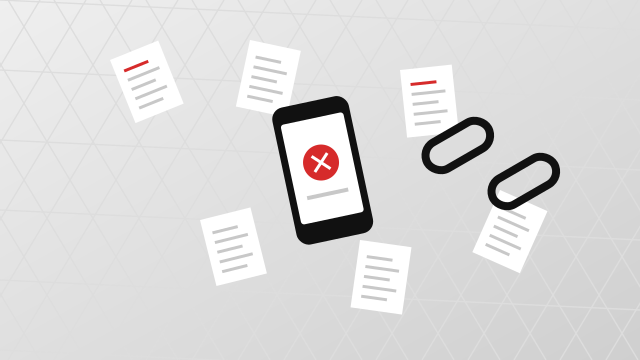
Seven kinds of partners, one shared language. Every booking, consultation and prescription becomes a standard FHIR resource that any authorised system can read, with the patient’s consent.
01 / 07
Online agenda, consultation notes and ordonnances, all in one place. Every booking, visit and prescription is written once, in the international format.
FHIRSchedule · Slot · Appointment · Encounter
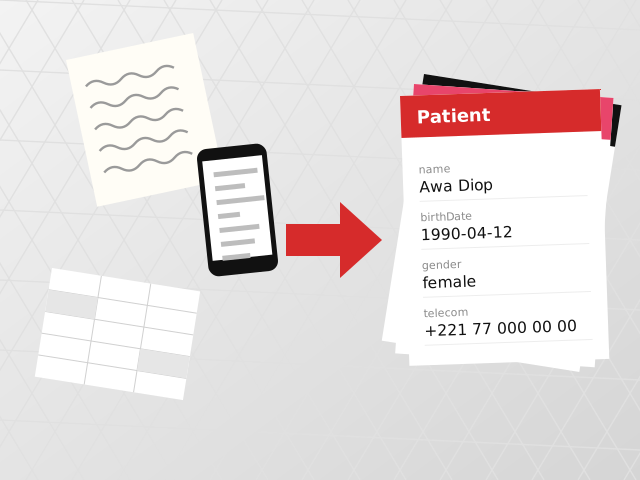
Imagine every clinic in Dakar writing prescriptions in its own private shorthand. Each one makes sense inside its own walls and nowhere else. FHIR, pronounced “fire”, is the international answer: a shared way to write, label and exchange health information, published by HL7 and free for anyone to use.
Every piece of health information has an agreed shape, called a resource: a patient, an appointment, a prescription, a blood-pressure reading. Like an official form, everyone fills in the same boxes in the same way, so any system can read it.
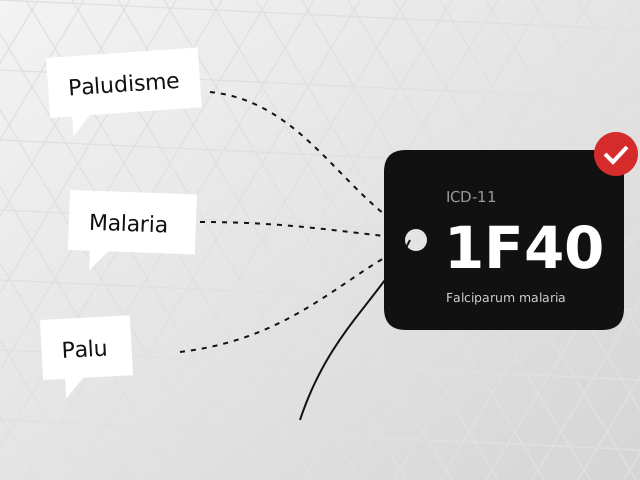
Diseases, lab tests and medicines carry international codes. Whether a doctor writes paludisme, malaria or palu, the record carries the same code, 1F40, and every system understands it the same way.
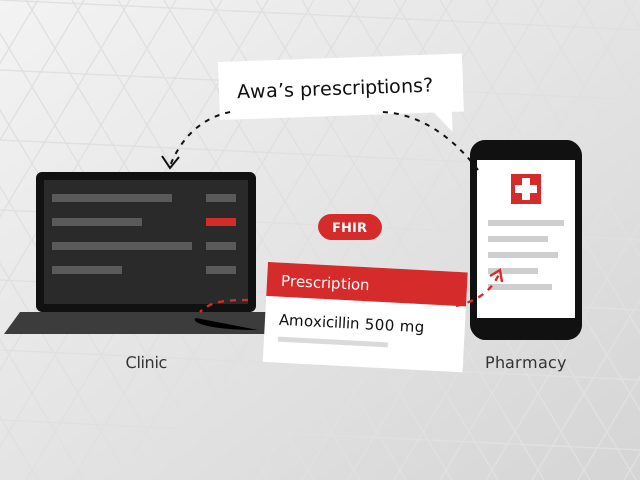
Systems talk over the internet using the same simple requests, a bit like ordering from the same menu everywhere: “give me this patient’s prescriptions”. Any FHIR system understands the question and answers in the same format.
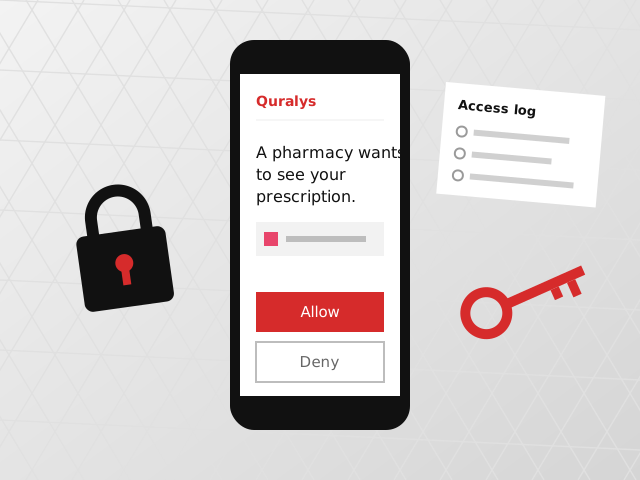
Nothing is shared by default. An app or a pharmacy only sees what it has been allowed to see, with the patient’s consent, and every access is recorded.
“FHIR is to health data what the shipping container was to trade: the box is standard, so everything else can move.”
An interactive film, not a video file: scrub it, switch it between English and French, and watch it full screen.
Thirty days, one loop, end to end. A patient app to find, book and pay, and a doctor console to plan and run the consultation. Video is just another way to hold the same appointment.
Specialty, neighbourhood, language and the next free slot, from a phone, in French first.
FHIR · Practitioner · HealthcareServiceThe patient picks a slot straight from the doctor’s live agenda, with the doctor’s own availability rules.
FHIR · Slot → AppointmentWave or Orange Money through a local aggregator, confirmed instantly. Paying at booking is designed to cut no-shows.
FHIR · ChargeItemAt the clinic or by video in the browser. The doctor console holds notes, history and the patient’s details.
FHIR · EncounterA pre-filled template the doctor adjusts, signed and delivered to the patient’s phone as a PDF with a QR check.
FHIR · MedicationRequestReminders and the next appointment by SMS or WhatsApp.
FHIR · Communication“Success is simple: three to five private doctors running real appointments, real patients paying, and a live demo on stage that never breaks.”
Young, mobile, and already paying by phone. Senegal is young and urbanising fast, and its people are connected through the phone. Mobile money is the default way to pay, which removes the biggest barrier to paid online booking.
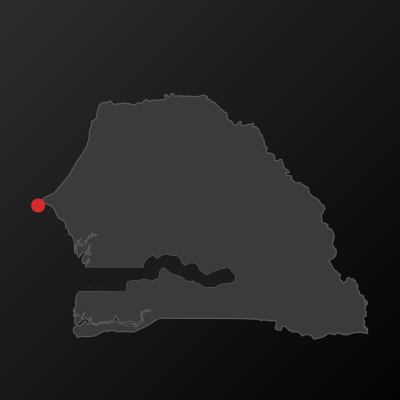
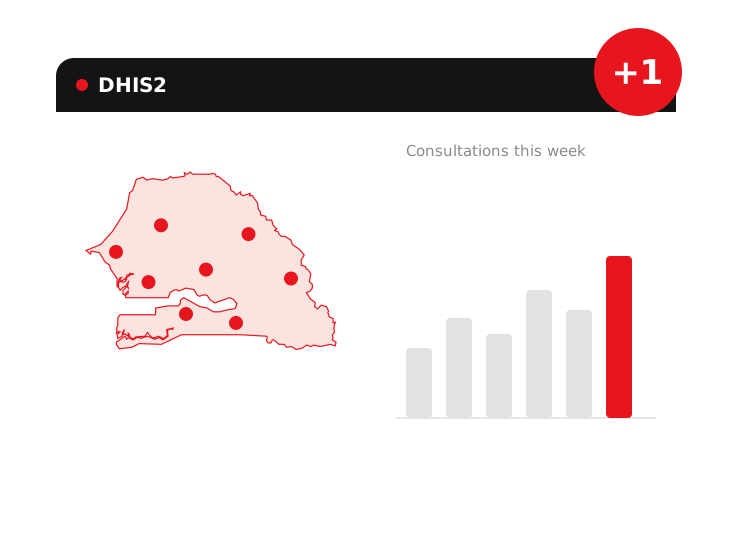
Nothing in Quralys is specific to one country except configuration. FHIR is international, DHIS2 runs national health information in many African countries, and mobile money is how the region pays. Each new country is a deployment, not a rebuild.
Private doctors first, then clinics, pharmacies and labs, then the national DHIS2. Data hosted in Senegal.
Plain-language explainers on health data, standards and care in Senegal, each one sourced.
We’re looking for