Online agenda, consultation notes and ordonnances, all in one place. Every booking, visit and prescription is written once, in the international format.
What changes
- A live agenda patients can book into, day and night
- Fewer calls at peak hours, fewer empty slots
- The patient’s history on screen before they sit down
Admissions and referrals arrive with the patient’s full history, instead of a handwritten letter and a plastic bag of old results.
What changes
- Referrals that carry diagnoses, treatments and results
- Discharge summaries that reach the family doctor
- No re-registration at every department
Scan the ordonnance, check it is genuine, check the stock, mark it dispensed. No more deciphering handwriting at the counter.
What changes
- Readable, verifiable prescriptions with a QR check
- Medicines coded with international ATC codes
- Later: which pharmacy nearby has it in stock
Test orders arrive online. Results go straight back to the doctor and the patient, coded so any system can read them.
What changes
- Orders without paper forms or retyping
- Results coded with LOINC, the international lab code
- Trends over time, not loose sheets of paper
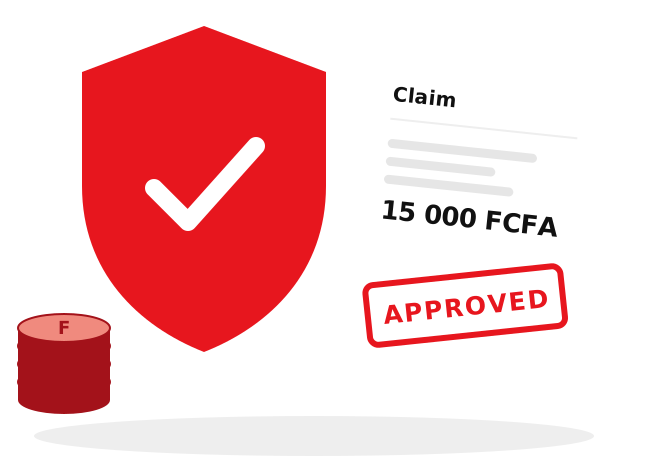
Coverage checked in seconds, claims reimbursed without paper. The record that drives the consultation also drives the reimbursement.
What changes
- Eligibility checked at booking, not at the counter
- Clean, coded claims for insurers, mutuelles and IPM schemes
- Faster reimbursement, fewer disputes
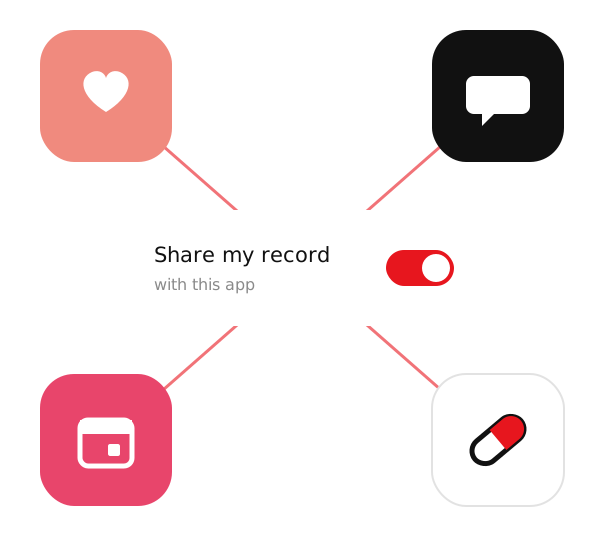
Existing health apps plug into the same record, with the patient’s consent, instead of building one more island.
What changes
- A standard API instead of custom integrations
- Patients choose which app sees what
- Every access logged and visible
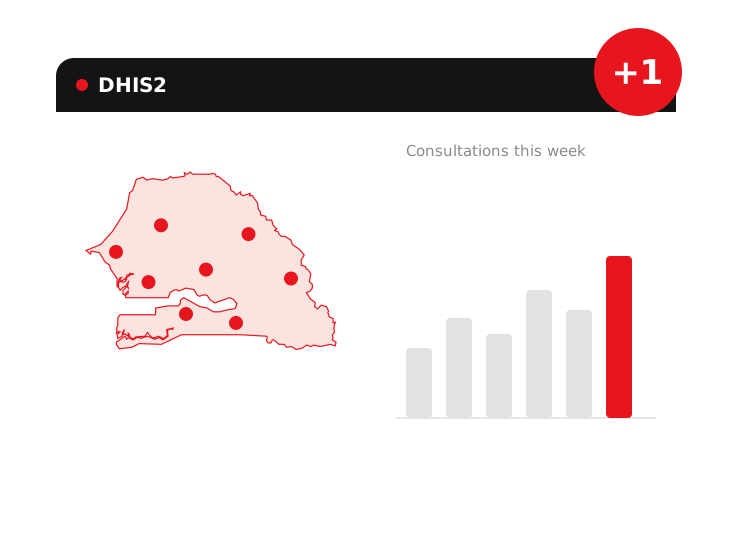
Anonymous indicators flow into DHIS2, the national health information system, with no manual reporting and no patient names.
What changes
- Live, anonymous indicators instead of monthly paper forms
- The codes DHIS2 already understands (ICD-11)
- Private-sector care finally counted
Aggregate systems count health; they don’t treat patients. For more than ten years DHIS2 has been the spine of Senegal’s national health information system, deployed from central level down to districts and community health posts. It is open source and supports FHIR.
- Quralys core and modules
- Points of care
- Payers: insurers, mutuelles, company schemes
- Future connections
What DHIS2 does
Aggregate reporting, dashboards and programme trackers (tuberculosis, HIV and others) that steer public health decisions.
What it lacks
A native FHIR store. Its data model is very different from FHIR, so connecting live clinical software to it is complex and costly.
The missing layer
Quralys sits in the middle: a live, patient-level FHIR record plus a gateway that turns clinical events into the tracker events and indicators DHIS2 expects.
Payers belong on the same map. Insurers, mutual health funds (mutuelles) and company health schemes (IPM) all need clean, coded data to check and reimburse care. FHIR has standard resources for exactly this, Coverage, Claim and ClaimResponse, so the record that drives the consultation can also drive the reimbursement, without paper forms in between.
Countries bridge the distance between clinics and DHIS2 with a middleware layer that does the translation. In Senegal, that clinical layer is what’s missing. The global DHIS2 community already works this way: in its June 2026 integration survey, about half of the integrations described (8 of 15) used FHIR, and the mapping most often happened in a middleware layer.
“We don’t replace DHIS2 or ask anyone to change it. We supply the front door it’s missing.”
Assets
- National reach, down to community health posts
- Open source, standards-aware
- Ten years of national use
Gaps
- Built for counting, not for live care
- No native FHIR store
- Needs middleware to talk to clinics
Talk to us if you run
- Clinics and hospitals
- Pharmacies and laboratories
- Insurers, mutuelles and IPM
- Health app makers
- DHIS2 implementers