Q-FidesIdentity & consent

Q-Fides is about who may open a record. The access rules for each role work today. The consent screens, where the patient decides for themselves, are still to come.
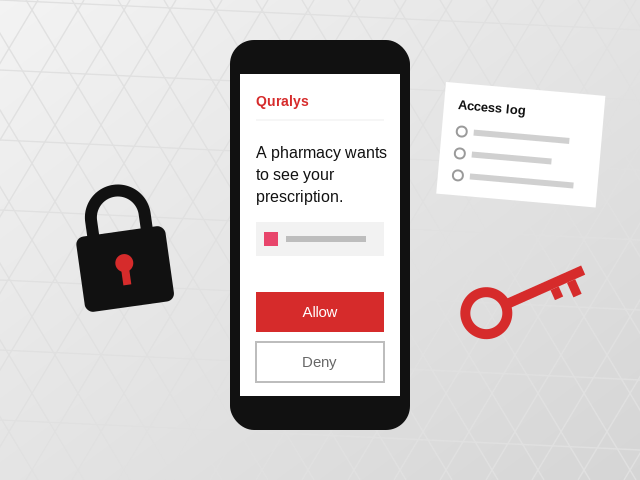
An illustration of the idea, not a screen of the product.
- 1
Each role has its limits
A patient sees their own data. A practice cannot open the record of a patient who has never come to it. The server enforces this, not the screen.
- 2
A doctor brings in a secretary
They create a one-time code tied to her email, valid for 48 hours. She starts with the agendas and patients’ identity, nothing clinical.
- 3
Rights are switched on one by one
Billing, cover, documents and the reception channel. Withdrawing her access removes them all.
Already in the product, in testing
- Access rules for patients, doctors and secretaries, enforced by the server
- One-time codes for secretaries, rights one by one, and withdrawal
- Reading a patient’s card by USB scanner or camera: off by default, card layouts still to confirm with issuers
- A sign-in page for partner apps
Coming next
- Consent screens: the patient chooses, per partner and per data
- Every access visible to the patient
- Checking an email address or a phone number at sign-up
- Two-step sign-in
- Chip cards
Patients
Today, the access rules protect their record. Tomorrow, they decide who else may read it.
Clinics & hospitals
Gives each member of staff what they need, and can withdraw it at any moment.
Health apps
Will ask the patient’s permission through one standard screen. This does not exist yet.